
Calf-Tel Black Calf-Tel Black

What Can We Do Better for Calves?

Updates from the Dairy Cattle Welfare Symposium 2022

Compiled by Kelly Driver

Animal social behaviors and those of dairy calves specifically were the lead topics kicking off the 2022 Dairy Cattle Welfare Symposium, held May 18-19 in Syracuse, NY. In fact, the entire first morning of the conference was devoted to the most recent research. Several other of the interesting presentations throughout the two-day event also related to dairy calves. Here are some brief summaries of the calf related topics.

Animal social behavior. Greetings, groups, courtship, gifting, play, grieving, and both spoken & unspoken acts are the rituals that develop social bonds, explained Dr. Caitlin O’Connell-Rodwell in the opening keynote address. Dr. O’Connell shared many experiences from her thirty years of research with elephants at Harvard University. Play inspires creativity, while building confidence and trust among animals. And while things like play come naturally to animals, she has found that burial and grief rituals are learned culturally. She has also written a fascinating book, titled “Wild Rituals,” that explores each of these areas in more detail.

Dairy Cattle Behavior. The important developmental benefits of social contact in dairy cattle have been well documented by Dr. Jennifer Van Os and her team at University of Wisconsin in recent years. In her presentation, Dr. Van Os reviewed the many stakeholders in animal welfare and the evolving care of pre-weaned dairy calves in terms of housing and social contact. She shared examples of consumer concerns with cow-calf separation and calves being raised individually, along with her team’s research findings that when given an option, paired calves will spend up to 80% of their time resting together in the same hutch. Additionally, she touched on the benefit of play behavior, resilience to stress, and the cognitive flexibility calves in social housing exhibit. One of her key points was the regarding the adaptability calves need, to learn new things throughout their lifetime, including new feeds, housing and social group changes, and even milking routines. Dr. Van Os also touched on the research that has begun related to cow-calf separation and related consumer sentiments, as well as practical solutions for dairy farms.
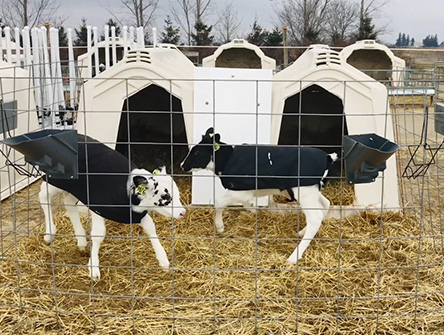
The role social bonds and play have in the pre-weaned dairy calf’s development was a key topic at the Dairy Cattle Welfare Symposium on May 18-19 in Syracuse, NY. Photo courtesy of Dr. J. Van Os

Calf social housing. The effect of social housing and dairy calf social bonding was presented by Emily Lindner, who is conducting research at the University of Florida. Some 63% of calves in the United States are housed individually (USDA, 2016) as producers cite better calf health and closer management of feed intake as the reasons. However, evidence indicates that social housing does not increase disease. Instead, socially housed calves exhibit increased acceptance of new feeds and solid feed intake overall, less avoidance of novel objects, and the development of social behaviors.

A total of 40 calves were tested at 4 weeks of age, designed to assess the formation of social bonds. Lindner’s research showed that pair-housed calves preferred to be near their pen mate, but spent more time near other calves regardless of their familiarity with them. In contrast, individually housed calves showed no preference between a calf housed within eyesight of them and a calf housed elsewhere when allowed open access to either. The results of Lindner’s work also indicate that physical contact is necessary to the development of social bonds in young dairy calves. According to Lindner, this likely improves calf welfare by allowing social behaviors and easing later social interactions.

Calf e-learning and SOP. Getting the most from calf care standard operating procedures (SOP) was the topic presented by Sophia Neukirchner from Freie Universität Berlin. She kicked off the presentation with a reminder that an SOP should be step-by-step instructions using little text and many pictures to explain the who, what, how and why of any process. A good SOP helps ensure that tasks are completed with consistency, quality and can be very useful when training new employees and as reference material for the entire team. Often, we see SOPs posted in areas of the dairy, written in the native language of the country, but have we considered team members that speak a different language? Neukirchner’s research has centered on the presence of calf-care SOPs and if ready-made SOPs would be useful, including e-learning platforms. Her results showed that 66% of participants felt ready-made calf SOPs would be very helpful on their farm. From the brief e-learning courses offered, she found 85% of participants felt the courses were good for training new employees. Team member confidence to perform the tasks of colostrum testing, tube feeding, and disbudding increased by as much as 33% after completing the e-learning courses.

Disbudding. This important topic is covered in the FARM initiative and other cattle welfare assurance programs.  As caustic paste becomes more widely used for disbudding, the related wound healing times and pain are being studied by Alycia Drwencke at University of California-Davis. Drwencke has studied a group of Holstein and Jersey calves that were disbudded at 3 days old with Dr. Naylor’s caustic paste. Her resulting data indicates that wounds from the paste are sensitive for at least six weeks and take twice as long to heal as cauterized horn bud wounds, which show an average 8.3 weeks for the area to re-epithelialize. In this study, the caustic past wounds had an average 15.2 weeks to be considered healed. Ms. Drwencke will be sharing more about her studies in an upcoming Calf-Tel blog.

The overall take home from the symposium was the dairy industry’s opportunity to review the continuing research and adapt our practices, for both cattle and people, to embrace change. Other topics covered throughout the conference included adapting to new regulations, on-farm labor and animal welfare, consumer and purchasing trends, and grazing research and producer experiences. For more information about the Dairy Cattle Welfare Council, please visit https://www.dcwcouncil.org/.

Kelly Driver, MBA has been involved in the New York dairy industry all her life. In addition to raising dairy calves and replacement heifers, she is the Eastern US & Canada Territory Manager for Calf-Tel. Feel free to contact her at kellydriver@hampelcorp.com with your calf questions or suggest a topic you would like addressed in a future blog.

Resources

Drwencke, Alycia M. (2022, May). Wound healing following caustic paste disbudding in dairy calves. Dairy Cattle Welfare Symposium, Syracuse, NY.

Lindner EE, Gingerich KN, Burke KC, Doyle SB, Miller-Cushon EK. Effects of Social Housing on Dairy Calf Social Bonding. Animals. 2022; 12(7):821. https://doi.org/10.3390/ani12070821

Neukirchner, Sophia. (2022, May). E-learning courses are a popular tool to implement SOPs in calf care. Dairy Cattle Welfare Symposium, Syracuse, NY.

O’Connell, Caitlin (2022, May). Animal social behavior. Dairy Cattle Welfare Symposium, Syracuse, NY.

Van Os, Jennifer. (2022, May). Why social behavior matters for cattle welfare. Dairy Cattle Welfare Symposium, Syracuse, NY.
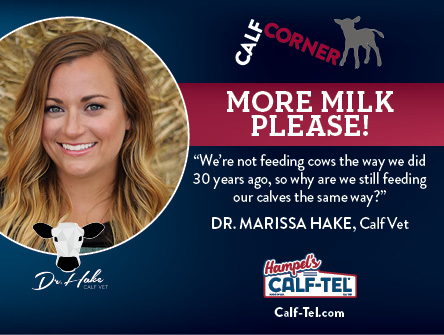

More Milk Please!

By Dr. Marissa Hake, Calf Vet

We’ve historically fed calves to meet their maintenance needs, but not to their full potential. There’s lots of reasons why – milk replacer cost, bucket or bottle size limitations, fear of over-feeding or nutritional “scours”. Or maybe it’s an even worse reason like “This is the way we’ve always done it”. We’re not feeding cows the way we did 30 years ago, so why are we still feeding our calves the same way?

The standard milk replacer feeding program has traditionally been 2 quarts of milk replacer (at 12% solids) fed twice a day. This program was developed to drive calves to eat more grain but leads to poor weight gains in the first month of life. We have fed calves this way to get them off milk and onto solid feed because milk replacer is expensive as compared to grain. One thing that we must remember is in the first 3+ weeks of life, the calf’s rumen is developing, and we cannot rely on grain to provide enough calories for the calf. In addition, calves are only born with 2-4% body fat, so they cannot rely on fat reserves to sustain them in the first month of life either. Restricting calories during the most vulnerable time results in poor growth and increased susceptibility to disease.

We often forget that calfhood diseases impact future lactating performance. So, while it might be a long 2 years until that newborn heifer steps hoof into your parlor, what happens to her in the first couple months of life will pre-determine your return on investment. Research has shown that for each pound of daily gain pre-weaning, milk production increased by 1,540 lbs. in the first lactation or 6,000 lbs. over three lactations. Management and nutritional practices during calfhood have 3-7 times more influence on future milk production than sire selection!

So why is the traditional 2 quarts of milk replacer twice a day not optimal? First, we need to discuss maintenance energy.

What is maintenance energy? Maintenance energy is what the calf needs to just maintain normal body functions, body temperature, and stay alive. This is the energy used before the calf can allocate resources to grow.  A calf’s maintenance energy increases as their body size increases. So, the maintenance needs of a 60lb calf are less than that of a 110lb calf, yet we feed them the same way. Maintenance energy also changes based on ambient temperature and thermal conditions. This means a calf in a wet and drafty pen will require more energy than a calf in a dry, well-ventilated pen, even at the same temperature. Maintenance energy also increases with disease pressure. Sick calves require more energy to mount an immune response. In my opinion, what you don’t pay for in milk the first month of life, you’ll pay for in performance, treatments, and death loss.

The chart below from Cornell University shows how many quarts of 20:20 milk replacer that a calf needs based on body weight and ambient temperature. The blue bars show how much MR is needed to meet maintenance energy (just stay alive) and the yellow bars represent the additional MR needed to achieve 1 lb of gain per day. The left side of the chart is the number of quarts/day the calf would need of 20:20 milk replacer.  As you can see, when temperatures decrease the calves need to be fed more for maintenance energy. Also, you can see that with the traditional 4 quarts/day feeding program the 80lb calf at 10 degrees and the 100 lb calf at 30 degrees and below are not growing and possibly losing weight. Another thing to note is that at optimal temp of 50 degrees, the 100lb calf requires more for maintenance than the 80 lb calf.

(Chart Credit: https://www.vet.cornell.edu/animal-health-diagnostic-center/programs/nyschap/modules-documents/LiquidFeedManagement#:~:text=Whole%20milk%20can%20be%20used,feeding%20when%20fed%20twice%20daily.)

What does this mean? At an optimal temperature of 50 degrees, our 80 and 100 lbs calves will gain very little in the first 3-4 weeks, but will hopefully get to the point where they are eating enough grain to start using that for growth. If the temperature drops to 30 degrees F our 80lb calf is now gaining very little and our 100 lb calf is losing weight! I hear calf raisers say this all the time “I would rather raise the 70-80 lb calves than the big 100lb calves. The smaller ones do better, probably because less stress at birth”. I argue it’s that we’re not optimally feeding those larger calves making them more prone to disease.  Again, remember these calves are less than 4 weeks old and rely completely on milk to survive. We need to provide our calves with more calories to grow and thrive.

According to the Dairy Calf and Heifer Association’s Gold Standards for Heifer Growth, it’s recommended that calves should be doubling their birth weights in the first 56 days of life. In order to achieve this, an 80 lb calf would need to be gaining 1.4lbs+ per day. If we consider our chart above, an 80lb calf at IDEAL conditions with 0 disease stress would require almost 6 quarts of 20:20 milk replacer to achieve 1lb of gain per day.

How to provide more calories for growth

  1. Increase volume
  2. Increase calories

Increasing volume is relatively easy and most calves can tolerate greater than 4 quarts daily. Smaller calves sometimes can’t tolerate that large of volume so adjustments should be made based on size. If farms can swing the logistics, feeding 3 times a day can also help increase volumes fed. Another option is to increase the caloric content of the milk. This can be done by feeding bulk tank milk or by adding extra milk replacer to your mix. Adding 2-4 extra ounces can increase energy by 25-50. You can also use a higher fat:protein milk replacer or add a balancer to your current milk replacer or bulk tank milk. Make sure that you are closely monitoring the total solids and feeding above 12-13% solids should only be done if calves have access to free-choice water!

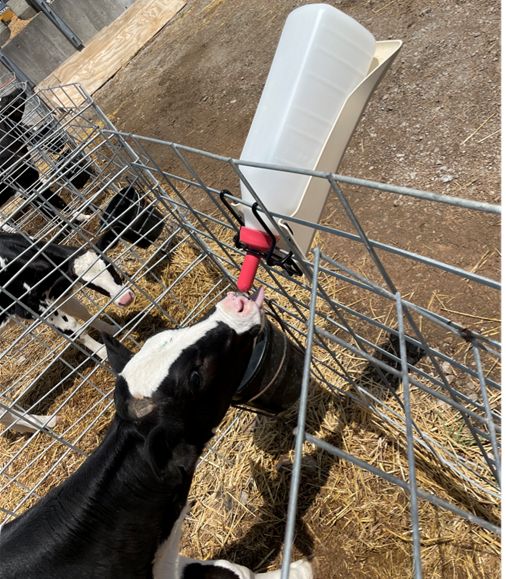
4-quart Calf-Tel bottles can help producers looking to increase feeding volumes.

One lesson that I’ve learned along the way is “feed calves based on your top 50%, not your bottom 10%”. We need to stop making feeding decisions that hold back our top calves.

Nutrition is just one piece of the calf health puzzle, so make sure to work with your veterinarian and nutritionist to develop your herd health and feeding programs. 

Dr. Marissa Hake is a veterinarian who has focused her career on calf management and welfare. In her previous role she managed 60,000+ pre-weaned calves annually and is passionate about developing practical ways to improve calf care. Feel free to contact her at drhakecalfvet.com with any questions.

References

https://www.wvdl.wisc.edu/index.php/calf-maintenance-in-cold-weather/#:~:text=to%204%20quarts.-,Feed%20the%20calves%203%20quarts%20of%20milk%20or%20milk%20replacer,instead%20of%20twice%20a%20day.https://extension.psu.edu/feeding-the-newborn-dairy-calf

https://www.vet.cornell.edu/animal-health-diagnostic-center/programs/nyschap/modules-documents/LiquidFeedManagement#:~:text=Whole%20milk%20can%20be%20used,feeding%20when%20fed%20twice%20daily.

https://www.extension.iastate.edu/dairyteam/files/page/files/PracticalEconOfAccelratedCalfFeeding_Tyler.pdf

http://livestocktrail.illinois.edu/dairynet/paperDisplay.cfm?ContentID=358

https://www.progressivecattle.com/topics/feed-nutrition/brown-fat-ensures-survival-in-calves

https://dairy.osu.edu/newsletter/buckeye-dairy-news/volume-21-issue-1/cold-weather-dairy-calf-care

https://dyson.cornell.edu/wp-content/uploads/sites/5/2020/09/Dairy-Replacement-Costs-Writeup-Final1-VD.pdf

Amaral-Phillips, D.M. Dairy Calf Management Practices Impact Future Production. University of Kentucky College of Agriculture, Food and Environment.

https://vet-advantage.com/vet_advantage/improved-calf-health-benefits-long-term-performance/

https://bloximages.chicago2.vip.townnews.com/agupdate.com/content/tncms/assets/v3/editorial/f/88/f88f3b45-67bd-5bff-aa15-232e05789fe5/5f7765c2b9341.pdf.pdf

Are Calves Better Together?

Calf Care Givers Share Their Experience with Paired Housing

It seems one only need pick up the latest farm publication or attend a dairy conference and the topic of paired or social rearing of calves comes up. We thought it worthwhile to ask some calf care managers to share their experiences with it and appreciate Calf-Tel dealer Holm & Laue assisting in gathering responses from customers in Germany to join the panel.

Mitch Breunig
Mystic Valley Dairy, Wisconsin, USA
Number of pre-weaned calves: 60
Calves raised annually: 325
Daniela Schönberger
Schönberger Hof, Western Germany
Number of pre-weaned calves: 110
Calves raised annually: 300
Steven Houchens, DVM
Capstone Ranch, California, USA
Number of pre-weaned calves:  400
Calves raised annually:  2000
Konstanze Rohwer
Marcus Rohwer, Northern Germany
Number of pre-weaned calves: 48
Calves raised annually: approx. 70, plus 180 calves sold after their 14th day
Mahmudjon Pirimov
Lübbinchen Milch & Mast, Germany
Number of pre-weaned calves: 76 in pairs & 94 on milk bars with 10 nipples
Calves raised annually: 570 (27% of calvings)
Please share a bit about your operation.

BREUNIG: We milk 460 Registered Holsteins and farm 1070 acres. We currently have a 33,000-lb. rolling herd average and have developed a market for fresh cows to other farms. With our calves, we see very little scours or death loss and bull calves are sold at birth.

SCHONBERGER: We have a mixed farm of grain, dairy cattle, fattening bulls and biogas in the Westerwald, between Cologne and Frankfurt, Germany. We cultivate 300 hectare and milk 300 Holstein cows. Our last major construction project was the cowshed and milk house in 2009, but now a new calf barn is in the planning stage.

HOUCHENS: Capstone Ranch consists of 2 dairy locations, crop and orchard farming, and a calf ranch.  In the summer of 2019, we started raising a portion of our calves in house.  The rest of our calves are raised off-site by a custom grower.

ROHWER: Our farm has 240 Holstein-Friesian cows with prolonged lactation in individual animals resulting in 10,000-liter herd performance. To reduce the number of offspring, we are using beef sperm for crossbreed calves. We have 160 hectares of grass and corn silage, with little arable farming, at Westerronfeld in northern Germany.

PIRIMOV: We milk 2000 Holstein-Friesian cows and have 70 total employees. Forty of them are on the milk production team. We are GMO Free.

What led your operation to start pairing calves?

BREUNIG: Following the research from Dr. Jennifer Van Os at UW-Madison we began pairing calves. The research showed no negative effects. I also wanted to improve the stalls in my calf barn to get better ventilation too. Animal welfare is a big deal and consumers do not like calves being raised individually. We did pairs to proactively address this concern.

SCHONBERGER: I read some reports that appealed to me a lot and so I tried it out.

HOUCHENS: Research articles and word of mouth led us to the idea of pairing calves.  We were hopeful we could grow a more resilient animal through earlier onset of starter intake, earlier social interactions, and improved adaptability of the calf post-hutch.

ROHWER: We are able to increase our stock with the same number of hutches.

PIRIMOV: Three years ago, there were not enough hutches available for all the calves, so two calves were sometimes housed in a hutch. It worked very well, so it has become the standard.

How long have you been raising calves in pairs? How did you raise calves previously?

BREUNIG: We have been raising calves in pairs since March 2020. Prior to that, calves were raised in individual hutches with half in a tunnel vent barn and the other half outside in hutches.

SCHONBERGER: We have been raising in pairs for about three years now. Before that, they were raised in single (individual) hutches.

HOUCHENS: We have been raising calves in pairs for about a year and a half.  We first began pairing calves with two calves in one XL (Calf-Tel 35|85) hutch.  This worked well but the pen and hutch area were difficult to keep dry and required much more frequent bedding.  We have since transitioned to two calves in two XL hutches connected through shared fencing.  Prior to beginning paired rearing, we were raising calves one calf per XL hutch.

ROHWER: We started raising in pairs in 2017 and prior to that were in individual hutches.

PIRIMOV: We have been raising in pairs for about 3 years. Previously the calves were in individual hutches.

Tell us about when and how you pair calves please.

BREUNIG: We pair calves from day 1 of their life and they stay paired until moving to the weaned calf barn. We usually have enough calves born so there is only a 1 or 2-day difference in age of the pair.

SCHONBERGER: My approach is to keep them in pairs as early as possible, preferably from the beginning. If it doesn’t fit, I wait until after the colostrum/transit phase is done before pairing. We have Twin Hutches (Calf-Tel 35|85) from Holm & Laue outside but with a canopy and calf pens in the stable.

HOUCHENS: Calves are placed in hutches that are paired but have fencing to separate the calves.  This fencing stays in place for at least one week and is not removed until both calves drink their bottle well and are healthy.  If one of the calves become sick, the fencing is replaced to separate the pair until the calf returns to health.  Calves remain paired until they are removed from the hutch.

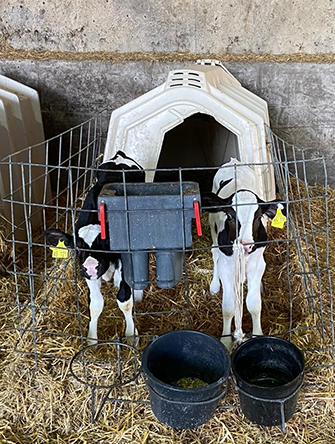
ROHWER: We raise only the calves for the market in this system because in our calves despite ad lib feeding the cross sucking has caused high looses with empty quarters, injured teats and failure to let down milk as cows. These calves are housed in Calf-Tel Pro hutches with an additional bucket holder on the door.

PIRIMOV: We have 8 heat boxes in the calving area and calves remain there for between 12 to 24 hours and are supplied with 3-4 liters of colostrum within 3 hours. They are then converted to the pair housing.

How much milk or milk replacer do you feed and how often each day do you feed?

BREUNIG: Calves are fed one gallon twice per day with Vita Plus Magnify. We start to wean at 46 days and calves switch to buckets at day 7 of weaning. The weaning process takes 20 days.

SCHONBERGER: Normally I feed 4 liters of milk replacer three times daily, but due to the current price situation, we are currently feeding 3 liters of milk replacer three times each day.

HOUCHENS: We feed hospital/line milk fortified with a balancer.  Calves are fed every 8 hours.  They start at 2 quarts for the first week and then go to 3 quarts until weaning. 

ROHWER: Twice daily in a hutch each receives 7-8 liters of whole milk. From the 20th day of life, they move to the Holm & Laue automatic feeder up to 50 days of age, maximum of 15 liters per day of whole milk. They are then weaned until 100 days of life.

PIRIMOV: For the three weeks of pairing, we feed about 12 liters/calf. The schedule follows:

6:00 a.m. Empty residual quantities
7:00 a.m. Filling 15L into each double nipple bucket
10:00 a.m. Filling all empty and almost empty buckets up to 2-4 liters
Afternoon Replenish to 7 liters

We feed 100% whole milk that is pasteurized, acidified and fortified with additive. From the first day we use hard teats, as no big difference was found when using soft teats.

Do you see any cross-sucking between calves? And if so, how do you address it?

BREUNIG: We feed with Peach Teat buckets instead of normal buckets and that helped a lot. We also wean over 10 days by giving smaller meals. We had more trouble with cross-sucking when calves were switched to 1x per day milk feeding at weaning. The calves were too hungry.

SCHONBERGER: No, we don’t see any more problems than before.

HOUCHENS: I can’t say it never happens but it’s uncommon for us to see.  If we see it persist in a pair, we will separate the calves with the fencing.

ROHWER: Yes, we spray bitter substance from the horses (antibite) or cannibal spray from poultry farming onto the udder system. For heifers a ring is pulled through the upper lip by a veterinarian. The regular suction weaners are difficult to use because of our water fountains with push valves.

PIRIMOV: Cross sucking is an annoying topic. No solution has yet been found, in the pairing phase or the groups of ten. We use nose rings as a young animal to discourage it.

Do you track any metrics for your paired calves? Was there a difference from your previous calf-rearing system?

BREUNIG: We like to double birth weight by weaning and try to get two pounds per day gain. Starter intake is also a big deal for calf success and needs to be palatable.

SCHONBERGER: We weigh calves at birth, after moving to the calf barn and to wean consistently, but only for a year.

HOUCHENS: When we first started with two calves in one hutch, we had the same average daily gain in paired vs unpaired groups.  Since the switch to two hutches per pair we have seen a slight improvement in the paired calves vs single in the hutch. 

ROHWER: No, we have over 1000-gram daily increases, so there has been no difference.

PIRIMOV: From birth to 3 weeks, our average daily gain is 850 grams. From four weeks to 90 days, calves gain an average 950 grams/day. We have tested whether we can go down to weaning at 70 days, but daily gains reduced to 750g, so now we are weaning again at 90 days. We also weigh again before insemination.

Is there any advice or observations you would share with others considering paired raising?

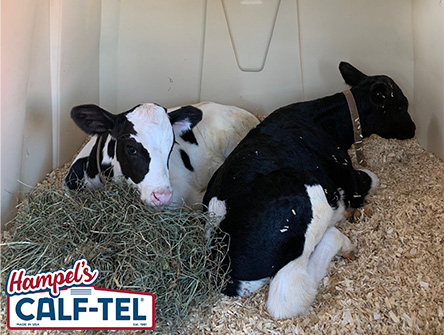
BREUNIG: It is important to make sure both calves are healthy. One can fall behind, if you don’t monitor their intake closely. We also ultrasound the calves’ lungs to look for subclinical pneumonia too. An observation on paired calves in hutches is that they like to lay together in the same hut.

SCHONBERGER: Just do it. There is nothing more beautiful than pair keeping with completely different social behavior of the animals. They drink more and learn from each other.

HOUCHENS: A high level of nutrition has been important in reducing the negative impacts in raising calves in pairs.  It limits negative behaviors like cross-suckling and reduces negative health events like pneumonia.  I also think it is beneficial to be ready to separate calves if one is suffering from illness.

ROHWER: We pair bull calves and calves for market at any time, but in the case of heifers, I advise against pair housing because of the cross sucking we have experienced. I also recommend using light colored drinking buckets for water as it allows better control of water quality!

PIRIMOV: The size of calves is more important than age. Calves of the same size are always paired into a hutch, even when a large and small calf might be closer together by age.

The Calf is Born, Now What?

by Grace Stroud

Congratulations! The next generation of your dairy has just arrived. What can we do to make sure they get a great start to a long, healthy, and productive life?

Whether you choose to allow the cow to lick her newborn or dry the calf with a towel, the calf needs stimulation to increase blood flow and get an appetite for colostrum. Cleaning the calf of the amniotic fluid will also prevent bacteria and debris in the bedding from sticking to their coat. One of the most important things to remember is that calves do not have much of an immune system at birth. That is why calf managers, veterinarians, and industry professionals like Calf-Tel stress cleanliness. The cleaner the calf and its surroundings, the healthier start the calf will have.

The calf should also have its navel dipped to eliminate the umbilical pathway for bacteria and be relocated to a clean location with minimal distractions. Having fewer distractions will reduce the calf’s stress and be beneficial as you feed colostrum.

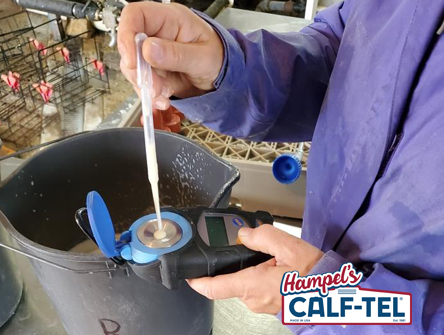
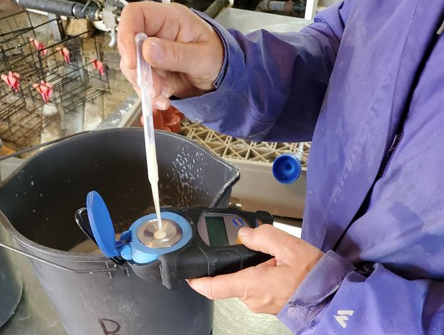
The next step is to administer colostrum. This should be done within the first one to two hours of birth. The sooner, the better. Keywords to remember in colostrum management are: “quality, quantity, and quickness”.  The longer the calf goes without colostrum, the guts’ ability to absorb the IgGs decreases. IgGs, or immunoglobins, transfer some of the mother’s immunity to the calf to help the calf build its immune system (Lopez et al., 2022).  To help determine the quality of your colostrum, an optical Brix refractometer or a digital Brix refractometer work well on the farm. A Brix value of 22% needs to be the cut-off. Anything lower than that should be discarded, and anything higher than 22% can be fed or frozen for storage (Life Start, n.d.). The calf should drink at least a gallon of colostrum. Working with your vet, you can create a colostrum management plan that will work for you and your farm.

Because of their weak immune system, calf performance can be boosted by being isolated in a clean, controlled environment for 7-10 days before going to your preferred housing for the remainder of their time on milk. Spending this time alone allows the calf to get a healthy start, begin building an immune system, learn to stand on their own, and learn to drink from a bottle holder or bucket.

Cleanliness, calf performance, and ease of use for the producer drove Calf-Tel to create the S-Series Starter Systems.

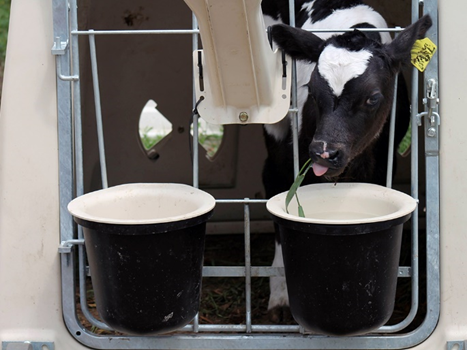
The System has a low opening front gate, making it easy to gain access to the calf. Here, you can give calf hood vaccinations, help the calf learn to stand, and easily feed colostrum, or help with daily feedings, if necessary. The Calf-Tel starter bowl can easily hold 2 quarts of milk. If you prefer to pail train your calves, this shallow bowl will make it easy for calves to learn how to drink from a bucket as they are not placing their head deep into the bucket right away. Using light colored buckets for water and milk can increase fluid intake as they can see inside the bucket more easily.

The Calf-Tel Starter Series units allow you to create an environment suitable to each calf’s needs, no matter the season. The System comes with a single upper vent and 2 lower vents. With an optional roof, the calf can enjoy increased airflow in the warm seasons, additional protection in the cooler months and extra warmth with an optional heat lamp. The vents combined with the heat lamp create a warm environment with proper airflow for your newborn.

Optional Cover and Heat Lamp
Adjustable Ventilation

Calf-Tel’s Starter Series comes with customizable accessories to adapt to your operation. The series comes with an optional steel base, which can be fitted with legs or wheels for ease of calf movement or simply rearranging. Placing this series on the ground can help you take advantage of any heated flooring you may have, while the optional base will hold the calves slightly above the ground and help with liquid drainage from the starter system.  Other accessories include chute or wire style bottle holders, and direct attach pails for water and calf starter. The Starter Series is easy to clean and sanitize, for safe and continued reuse, providing the perfect start for your youngest herd members.

Grace grew up with dairy, spending many days on the farm shadowing her dad as a herd manager. She quickly grew an appreciation and an attachment to the dairy industry, leading her to her career in ag sales and dairy farming today. Grace participated in 4-H for 10 years, competing in local, state, and national dairy judging; as well as local and state dairy quiz bowl competitions. Previously, Grace has worked in the milking parlor, with calves, and as an assistant herd manager. The assistant herd manager role included working with the dry cows, fresh cows, and any sick cows that needed special attention. Grace was also responsible for vaccinating all ages on the farm. Today, Grace enjoys raising calves, heifers, and preparing for local and national dairy shows when she is not in her office at Farmer Boy Ag.

If you have any questions or would like to contact Grace, please send all email inquiries to graces@farmerboyag.com.

SOURCES

Life Start. (n.d.). Measuring colostrum quality with a Brix refractometer is a practical method to ensure each calf gets good quality colostrum. Retrieved March 25, 2022, from https://ruminants.lifestartscience.com/colostrum-management/measuring-colostrum-quality-by-using-a-brix-refractometer

Lopez, A. J., & Heinrichs, A. J. (2022, January 27). Invited review: The importance of colostrum in the newborn dairy calf. Journal of Dairy Science. Retrieved March 25, 2022, from https://www.journalofdairyscience.org/article/S0022-0302(22)00037-6/fulltext

Buzz Off! Reducing Fly and Pest Populations Near Calves

by Kelly Driver, MBA

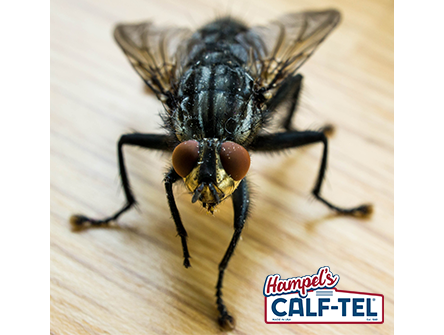
Yes, I know it’s only April and, in many regions, there may still be some snow on the ground. But this is exactly when we need to begin thinking about a fly control plan for calves, before the temperature gets much warmer.

Choose Your Methods. Using an integrated pest management (IPM) system approach to fly control is often more effective than a single strategy. Integrated Pest Management is an effective, environmentally and cost sensitive approach to pest management that relies on a combination of common-sense practices, along with complete information on the life cycles of pests and their interaction with the environment.

The parts of an IPM program are:

1. Cultural control – practice good sanitation.

2. Biological control – parasitoid releases that help reduce the number of hatching flies.

3. Chemical control – sprays, larvicides, and residual premise & whole animal sprays.

Experience around dairy farms has shown that an effective IPM program for fly control often includes a combination of all three parts.

The First Step. Identifying the type of flies and pests on your farm is the first step in an effective control program. We have to know what we are dealing with to be able to treat the problem. To identify the types of flies, consider hanging sticky tapes or ribbons to trap them. The Internet, gardening magazines, or local experts may be helpful in accurately identifying the pests. I like to think of it like going to the doctor to identify if you have a viral or bacterial infection, in order to best treat the problem.

The three most common types of flies around dairy operations are:

Stable flies: These pests deliver painful bites that cause irritation to the animal and can reduce growth or production.

House flies can often be found laying their eggs in cow manure and multiply quickly. They can spread disease among the herd.

Horn flies feed on the blood of the animal, causing tissue damage, irritation, and can result in weight loss or reduced gains.

Cultural Control. Preventing fly populations from becoming a problem should be the number one priority of any pest management program and the single most important step on a dairy or calf operation is waste management. Removing piled manure, waste feed, and even the wet waste that can accumulate around the base of waterers should be a regular part of the weekly farm chore routine. Immature flies love to live in this type of moist waste and if the temperature is right, they will hatch in 10-21 days. Cleaning up and removing waste interrupts the fly life-cycle and helps reduce the population.

Another area that can be a great hiding place for flies is tall grasses and weeds. Keeping areas like this near hutch pads or the perimeter of calf barns trimmed throughout the season makes one less place for flies to live.

Biological Control. Fly parasites can be considered an effective natural biological control because they are a natural enemy that kills developing flies in the immature maggot and pupa stage. These parasites are gnat-sized, burrowing insects that are a naturally occurring enemy of all manure breeding pest flies. These tiny wasps are specific to flies and stay close to manure and areas where flies like to reproduce. The wasps are naturally nocturnal, have no ability to sting, and disregard humans or animals in the area. Because fly parasites reproduce in 2-3 weeks, they are constantly replenishing the beneficial insect population as the warmer, damp seasons progress. However, because the fly life cycle is much shorter than that of the parasite, it is important to start using the parasites early in the spring season.

John & Lynda Lehr had seen testimonials of other farms using fly parasites successfully and began to look into it further. They have been using fly parasites at their New York operation the past four years and have found that starting early is the real key to effectively managing flies. They are on an automatic delivery system with Spalding Fly Predators™ that begins in late April and continues until October. Their goal is always to be ahead of the fly development. In the peak summer months, new fly parasites are dispersed more often, but the Lehrs find it averaging every 2-3 weeks.

When the Lehrs began looking into fly parasites “we found good information on websites, but actually talking to the customer service reps by phone was most helpful for us,” they note. “The representatives really helped us determine a schedule and the number of Fly PredatorsR we needed for our operation.” The team put parasites around waterers, barns, calf hutches and any wet or manure areas and have found that it has really helped manage their fly populations in conjunction with the pour-on and feed-through measures they were already using. Both their milk replacer and calf grain have ClariflyR in them during the summer months. The Lehrs also use a pour-on fly repellant for heifers on pasture, but since adding the Fly PredatorsR, find they only need to use it 2-3 times during the summer, instead of every two weeks as they did previously.

Another biological control method often considered on calf rearing sites is ClariflyR, the feed through fly control the Lehrs mention. This product stops flies in the larval stage and can be included in both milk based and calf starter portions of the calf’s diet.

Chemical Control. As you develop your fly control plan for this season, it may also include some chemical control measures as well. These may be residual premise sprays, larvicides, and pour-on or sprays applied to the animals directly. Once again, when considering a product, it is best to select one that best aligns with the type of flies on your calf-rearing site.

Spring is in the air. As I write this, the first spring flowers are starting to appear from the ground and as the temperatures continue to warm, the pesky flies won’t be far behind. Now is the best time to develop a robust pest management plan for your farm. Start now to tell flies to “buzz off” this season.

Kelly Driver, MBA has been involved in the New York dairy industry all her life. In addition to raising dairy calves and replacement heifers, she is the Eastern US & Canada Territory Manager for Calf-Tel. Feel free to contact her at kellydriver@hampelcorp.com with your calf questions or suggest a topic you would like addressed in a future blog.

Courtesy of our dealer –

CRI REPRODUCCIÓN ANIMAL

MÉXICO SA DE CV

Adding Efficiency to the Calf Operation

by Kelly Driver

As labor costs continue to rise, many calf raisers are looking for every bit of increased efficiency they can add to their operations, while still maintaining top level care for the calves. Let’s take a look at some of the areas different producers have focused on in the quest for greater efficiency.

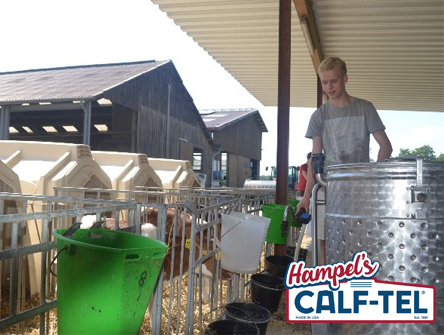
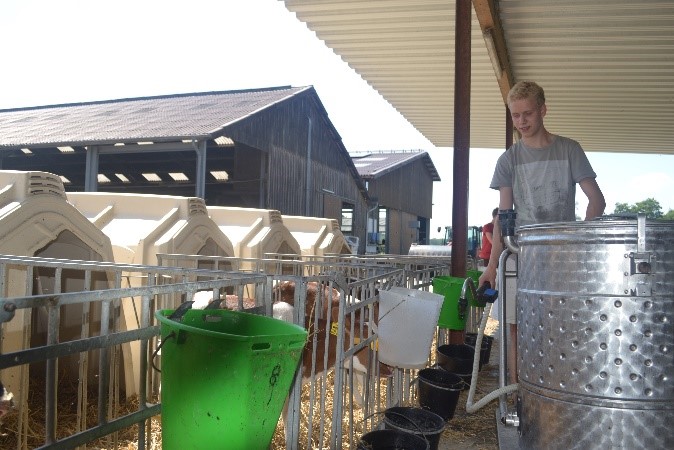
Feeding milk. The most important and time-consuming task in calf raising is feeding, whether it is milk, water or calf starter. And so, it naturally becomes one of the first places we look to gain efficiency. For smaller operations, it may mean an investment in a motorized device with a tank to deliver milk or water without carrying countless pails from the milk room to each calf individually. For larger operations hutch operations, a bottle trailer to fill, deliver and even wash the bottles may fill the need to feed more calves in timely fashion.

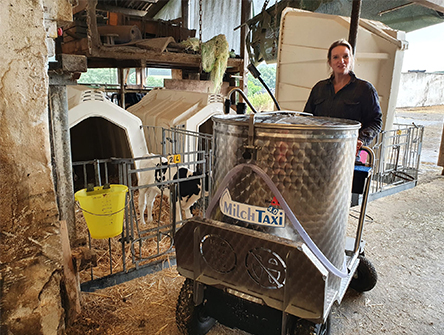
Portable milk pasteurizers offer efficiency when feeding a smaller number of calves. These units are versatile enough to batch pasteurize whole milk and the unit can then be wheeled to the calf housing area to dispense the milk. These units can also be used to reliably mix milk replacer for delivery as well. One farm I work with regularly found the time spent at each feeding reduced from 2.5 hours to 20 minutes when they converted to a portable pasteurizer rather than multiple trips carrying pails of milk to their calf area.

Photo: Calf-Star.com

When feeding hundreds or thousands of calves’, bottle trailers, like the one at left available from Calf-Star, are available in different sizes that can make feeding milk much more efficient. These stainless-steel trailers have bottle compartments where calf raisers can fill the bottles and feed by standing on the trailer side platform. To see this trailer in use, click here.

Once feeding is complete, the trailer returns to the milk kitchen area and the bottle compartments can be flipped upside down to wash, eliminating the time to hand washing bottles.

Grain cart. Prior to re-purposing this gravity wagon into a grain cart, calf starter grains were being delivered to the 450-hutch calf nursery in bags at Lamb Farms, Inc. in New York. “The cost difference between bagged and bulk feed alone paid for this in just four months,” notes Kendra Lamb. “That doesn’t even factor in the labor savings of being able to drive through the hutch area and just fill buckets to feed.”

Bedding hutches. It is no secret that adding straw to hutches demands time and labor, often several times each week in colder climates. One of the most common discussions I have on farm visits is how to make bedding hutches less labor intense. For Probst Feedlot LLC, a 725-hutch calf nursery in central Illinois, the decision to purchase a Teagle bale processor was easy. The bedding chopper holds two 4-foot square bales at a time, allowing Probst’s team to bed 100 hutches every 20 minutes. The Probst team figures the equipment purchase of both a used tractor and the bale shredder paid for itself in less than a year, as bedding by hand would require another full-time employee on the team. With the use of the bale processor, bedding costs per calf are 17 cents per day, including labor, at the calf nursery. To see the system, visit https://www.teaglemachinery.com/en-US/Products/Bale-Processors/Telehawk.

Washing hutches. It is sometimes surprising how many farms I visit are still moving hutches one at a time to the area where they are pressure washed and cleaned. And it is especially surprising that as herds grow, this practice gets overlooked in the quest for more efficiency.

Imagine how much time would be saved if a simple attachment to the front of a tractor or skidsteer moved 4-6 hutches at a time to the wash area? Two different producers in the Northeastern U.S. have created hutch movers that pick the hutches off the ground, carry them and hold while they are pressure washed and then return the hutches to a clean location, setting them neatly in a row. If this seems like something that only happens in a calf caregiver’s dream, take a look at the images below. Both are designed to quickly attach to the front of equipment likely already in use at the calf nursery each day.

Washing pens. Similar to some of the innovative hutch movers we have seen, here are some pen wash racks that producers have created that can also be easily picked up and moved with a tractor to clean pen pieces more efficiently.

The dictionary defines efficiency as “the (often measurable) ability to avoid wasting materials, energy, efforts, money, and time in doing something or in producing a desired result.” In calf raising that may mean the ability to do our work of raising healthy animals well and without waste of feed, labor, or time. In farming, efficiency also equates to real labor and cost savings for the operation.

Kelly Driver, MBA has been involved in the New York dairy industry all her life. She is the Eastern US & Canada Territory Manager for Calf-Tel. Feel free to contact her at kellydriver@hampelcorp.com with your calf questions or suggest a topic you would like addressed in a future blog.

Courtesy of our dealer –
CRI REPRODUCCIÓN ANIMAL
MÉXICO SA DE CV

Single or Ready to Mingle?

Could pooling high-quality colostrum benefit long-term calf immunity?

by Cari Reynolds, W.H. Miner Institute    

To ensure that calves achieve adequate passive transfer, feeding colostrum from a single dam is considered the standard. Pooling of colostrum is generally discouraged due to high risk of disease transmission and lowered colostrum quality due to the variability of immunoglobulin (IgG) levels among dams. In the spirit of efficiency, pooling colostrum on farms is not uncommon. A 2018 review of U.S. pre-weaned heifer raising practices published in the Journal of Dairy Science reported that of 104 farms surveyed across 13 states, 33 of those farms still pooled colostrum. Calves on U.S. farms fed pooled colostrum were 2.2 times more likely to experience failure of passive transfer than those calves fed colostrum from a single dam.    

If colostrum is pooled, it is recommended that only high-quality colostrum (≥50 mg/mL IgG or ≥22% Brix) from healthy cows is used, and pooling should not be practiced in situations where diseases could be transmitted through colostrum (i.e. Johne’s Disease). But since every cow is different in terms of pathogen exposure and immune function, could pooling of colostrum (if of high quality) actually be of benefit to the calf in terms of exposure to disease-specific antibodies and other immune qualities from different dams?

A recent article appearing in the Journal of Dairy Science from Teagasc, the agriculture and food development authority of Ireland, sought to close this knowledge gap by evaluating if pooled colostrum from several cows actually broadened the variety of antibodies that a calf received, and if this practice would improve disease-specific immunity throughout the first year of life. There is currently little data to compare immunity in calves fed either single-dam or pooled colostrum, and also to determine even in herds where mean colostrum IgG is high, if pooling can still affect colostrum quality. Understanding if there are differences in immunity between colostrum sources would give new insight and understanding of the places that pooled colostrum could be used.

In a nonconsecutive two-year study (2016 and 2018) that included 320 cows and 120 heifer calves (either Holstein-Friesian or Holstein-Friesian x Jersey), blood samples were taken from the cows close to parturition to determine immune profile and exposure to common infectious pathogens. Enrolled calves received one of three treatments: maternal colostrum (MC), nonmaternal colostrum (NMC; colostrum from another dam), or pooled colostrum (PC) from several cows at equal ratios. Colostrum was tested with a Brix refractometer to ensure that quality across all three treatment groups remained similar, and any colostrum with a Brix reading below 22% was not used. Calves in each treatment group received colostrum within 2 hours of birth at 8.5% of body weight, and either received subsequent feedings of milk replacer (calves enrolled in 2016) or transition milk from the same source as their treatment assignment (calves enrolled in 2018).

Despite variability in mean colostrum IgG between 2016 and 2018 (71.2 and 97.0 mg/mL, respectively), colostrum quality across both study years remained extremely high (mean 84.2 mg/mL). There were no differences in IgG concentrations between the pooled colostrum and the sources used for pooling, and colostrum IgG concentrations were highest in the NMC treatment group (mean 94.2 mg/mL). However, 24-hour serum IgG concentrations were greater in those calves fed colostrum from a single dam (either maternal or nonmaternal). Apparent efficiency of absorption (AEA), or the amount of IgG absorbed into the calf’s system relative to the amount of IgG that was ingested, was lower in those calves receiving pooled colostrum. This may be attributable to IgG in the gut binding to the variety of pathogens present in pooled colostrum, leaving less to be absorbed into the bloodstream. At 1 month of age, calves in the MC treatment group had the highest number of antibodies to bovine viral diarrhea (BVD), but no treatment effect was observed for other common diseases. Regardless of treatment, maternal antibody survival rates in the calves ranged from 4-7 months for a range of diseases, including BVD, Salmonella, Leptospirosis, parainfluenza virus (PI-3), bovine respiratory syncytial virus (BRSV), Rotavirus, and Coronavirus. These results suggest that high-quality colostrum, whether pooled or single-dam, provided calves with cross-protection against different strains of bacteria and viruses and explains the similar immunity across groups. However, more work to determine the exact relationship between colostrum and disease-specific immunity is necessary. It is also important to note that the colostrum in this study was not subjected to heat treatment, which may have resulted in more immunoglobulins available for absorption. Higher colostrum IgG concentration, as well as feeding of transition milk to those calves enrolled in 2018, may also have influenced antibody survival rates.

This study suggests that if best practices are followed when pooling colostrum (only using good quality from healthy cows, equal portions across cows, and proper storage), adequate levels of IgG could be maintained. Rigorous criteria and management is very important to be able to successfully use pooled colostrum, and feeding individual sources is still highly encouraged as much more information is still needed to fully understand if there could be additional benefit. So whether you keep it single or choose to mingle, ensuring colostrum quality is still the best way to set calves up for success.

Cari Reynolds earned a BS in Biology from University of Scranton and a Master of Public Health from the University of Massachusetts – Amherst. After several years working in the public health sector, Cari returned to her agricultural interests and she is currently a research intern at W.H. Miner Institute. Cari is a Ph.D. student in Animal Science at University of Vermont, where her research will focus on management and preventative strategies to mitigate diseases that impact both human and animal health. She can be reached at reynolds@whminer.com.

Feeding Calves to Weather Winter

by Sarah Morrison, Ph. D., Miner Institute

The thermoneutral zone of a calf under three weeks of age is between 59 and 77℉ (15 and 25°C).  Below the thermoneutral zone the heat that a calf normally produces is equal to, or less than, the amount of heat lost and the calf experiences cold stress.  Therefore, to maintain body temperature, the calf must either consume more energy to generate more metabolic heat or else the calf will be forced to use what limited body reserves it has for this purpose.  This prioritization of nutrients will always go first to maintenance (thermal regulation, immune and stress responses) and then toward growth.  With this in mind there are several feeding strategy considerations that can support calves through winter.

The youngest calves rely heavily on milk or milk replacer for the nutrients they need to support maintenance and growth but we must not forget about water and calf starter. Although calves less than three or four weeks of age are probably not consuming enough starter to appreciably contribute to their requirements, early starter intake is beneficial for initiating the rumen development process.  Starter and water should be offered during this time as these two things are very important for hydration, rumen development, and eventual weaning. 

Fuel the fire. Offer starter from birth as calves will increase, and often double, the starter they consume each week.  Depending on the milk or milk replacer feeding program, you may not see large amounts of starter intake initially. Still, the cumulation of starter intake before weaning is very important for weaning success and preventing postweaning slumps.  Initiation of starter intake stimulates fermentation of that feedstuff in the rumen.  Fermentation generates metabolic heat which helps calves consuming starter tolerate a wider range of environmental conditions (i.e. they can tolerate a colder environment). 

The 4:1 rule.  Calf feeders often fight with frozen water pails in colder temperatures, which can be pretty frustrating!  However, water is THE most essential nutrient for animals and, as a result, should not be abandoned in winter.  Water is not only the number one requirement for animals; it is crucial for starter intake and rumen development.  A good rule of thumb for calf water consumption is the 4:1 rule as calves will consume four parts water for every 1-part starter they consume. 

Calves may also increase the amount of water they drink in response to the solid concentration in milk or milk replacer.  Increasing milk solids is often a method used in cold temperatures to support increased nutrient requirements.  As solids increase above 14% in milk replacer, expect calves to drink more water.  In the first weeks of life, calves drink 1.5 to 3 quarts/liters of water a day, whereas by a month of age, calves will consume around 4-8 quarts/liters of water per day.  It is important to note that water provided in milk or milk replacer is not sufficient on its own to meet the needs of the calf.  Free choice water should be provided on its own so that calves may regulate their intake in response to what they require based on solids percentage in the liquid diet or based on their starter intake. 

Timing.   Calves should have free access to water throughout the day and from birth.  However, when temperatures get consistently below freezing, it can be challenging to battle frozen water in buckets.  Therefore, offering smaller amounts of warm water to the youngest calves (less than three weeks of age) multiple times throughout the day will help promote water intake.  Provide 2 quarts of water to the youngest calves after milk or milk replacer feeding.  An additional water feeding in the middle of the day would provide an opportunity for the calves to consume more water.  For older calves eating more starter, increasing the amount of water offered after milk or milk replacer feeding is vital.  As calves wean, providing water during regular milk or milk replacer feeding times will encourage starter intake in these calves.   

Temperature matters.  Milk and water consumed by calves can impact the amount of energy needed to maintain normal body temperature (101-102⁰F).  If calves consume milk or water that is below their normal body temperature, they must expend additional energy to warm their drink to normal body temperature, which increases maintenance requirements. 

Therefore, the temperature of milk or milk replacer provided to calves is important to monitor so that it is provided at the appropriate temperature to minimize the effect of cold temperatures for young calves. Regardless of the nutritional value, make sure every liquid meal a calf gets is at or above body temperature (target 105⁰F) when the calf is consuming that meal.  Usually, milk replacer tags have recommended mixing temperatures.  However, it is important to ensure that when that milk replacer finally makes it to the calf it is not below 105⁰F. 

Furthermore, calves prefer to drink warm water.  Ideally, offer water at 100°F or just above.  By providing warm water compared to cold water, the amount of energy expended by the calf to warm water up to the calf’s body temperature is minimized.  Cold water will also reduce the temperature of the rumen.  Work in the 1960s measured the change in rumen temperature in response to different water temperatures.  Calves were fed 46-81°F water, and it dropped the temperature of the rumen for approximately 1-2 hours by as much as 15°.  Whereas 99°F water only minimally changed rumen temperature for a shorter period.  If the temperature of the rumen drops, this may reduce the efficiency of the rumen and also reduce the amount of metabolic heat produced from fermentation. 

Things to Remember. Overall, providing water and starter from a young age can help support calves during winter.  Starter is important for rumen development and can provide some metabolic heat for that calf.  Do not forget about water for young calves!  It is essential from a hydration standpoint and essential for rumen development and efficiency.  Strategically plan when and how much water you offer to calves depending on their age and the amount of starter they are eating.  Can you find a way to provide warm water throughout the day to help encourage calves to drink and find ways to increase starter intake? 

Sarah Morrison, Ph.D. is a Research Scientist at the William H. Miner Agricultural Research Institute in Chazy, NY.Sarah grew up on her family’s dairy farm in Addison County, Vermont. She has a Bachelor’s of Science degree in Animal Science from the University of Vermont and a Master’s of Science and a Ph.D. from the University of Illinois. Her research at Miner focuses on dairy cattle nutrition and management, with a focus on calves and heifers. She can be contacted with questions at morrison@whminer.com.

Courtesy of our dealer –

CRI REPRODUCCIÓN ANIMAL

MÉXICO SA DE CV

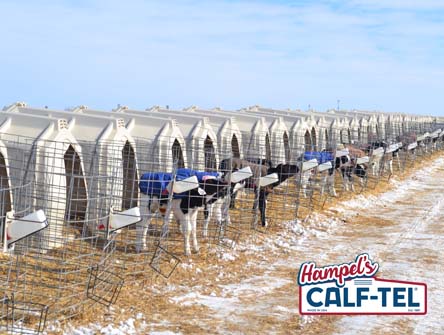
Finding the Best Calf Jacket for Winter Weather

by Kelly Driver, MBA

Photo by S. Morrison

As I sat down to write on this snowy morning in New York state, I was reminded of a conversation I had a few days ago about the differences in calf jackets. And yes, there is a difference. They are not created equal at all. And unless you are lucky enough to live in an area where the temperature never dips below 50oF, you have probably had to purchase jackets for the youngest herd members.

Too often we farmers tend to shop for calf jackets based solely on price, not necessarily the qualities and materials the jacket is made of. One of my hobbies is sewing and over the years I have learned about the properties of many different types of fabrics and clothing materials. I thought it might be worth chatting about some of those differences as they relate to the calf jacket.

First, let’s think about the basic parts of a jacket:

Shell. The shell of a calf jacket is the outermost portion and is the calf’s first line of defense from the elements and is also where the color and style points are on display. Elements we often look at in the calf jacket shell are the fabric type and water resistance, as well as the closure features – like buckles or Velcro that are strong enough to stay on the calf as they move about.

Filling. The filling of a jacket is what provides the most warmth. For example, a nylon or polyester coat usually doesn’t keep you very warm, but stuff it with down or a tightly woven polyester filling and it instantly becomes a protective layer against freezing temperatures and winds. Jackets willed with real down, like duck or goose feathers, offer one of the warmest, lightweight fillings available. Unfortunately, they are not waterproof and are very slow to dry, which doesn’t work well in the calf care world.

One of the lightest and very warmest filling materials offered is ThinsulateTM, a 3M product which is made of tiny polyester fibers that are super dense and because of their size are able to be woven with hardly any gaps between the fibers. This makes them very warm, as well as extremely water resistant. This technology can be a bit more expensive, but is worth every penny. Think about the times you have seen someone with a light-weight looking jacket on during a snow and wind storm and they appear to be quite warm and comfortable. It’s highly likely their jacket contains this material.

Lining. The lining of a jacket provides an inner layer of warmth, as well as helping the jacket maintain its shape. It generally provides a soft layer between the calf and any of the coarser materials used for the filling or shell. If we think about the lining in terms of our own human jackets, this layer is often quite soft and may contain polyester, silk or satin fabrics for comfort.

Now, let’s think about the best materials for each of those jacket parts:

Types of Shell Fabrics. I have seen a wide variety of fabrics used for the shell of calf jackets, including wool, fleece, polyester, nylon, flannel and denim. While materials like wool, fleece and flannel lead the purchaser to believe the calf jacket will be warm, we are forgetting that these fabrics are not waterproof. And as calf raisers, we all know that liquids go in the front of the calf in the form of milk and water and urine is expelled from the back. This happens even when they are laying down and leads to a very wet jacket when these types of fabrics are used. A wet jacket on a small calf in cold temperatures only adds to the heat loss equation.

The best fabrics for the outer shell of calf jackets are polyester and nylon. Both fabrics are basically a soft form of plastic and the main differences are that nylon is softer and stronger than polyester and doesn’t hold dye as well, so the color choices are probably more muted. Some of the brighter colored calf jackets on the market, like the pink ones available from Calf-Tel, are a nylon/polyester blend. Because of polyester’s water-resistant qualities and its absorption of dyes, it is often blended with other materials for the shell of both calf and human jackets. Polyester itself will protect from a medium amount of wind. Just one word of caution with polyester or its blends – read the care label when washing and drying. Polyester shrinks! Be certain to read the care label in the calf jacket to assure many years of use.

Types of Filling. I have seen jackets sold at different price points that are filled with layers of flannel, wool, and very thin sheets of polyester, a product sometimes used in lightweight quilts. In my opinion the key thing to be considered with a filling is the true insulating value it offers the calf, just as we expect a winter jacket to keep our children warm in cold and windy conditions.

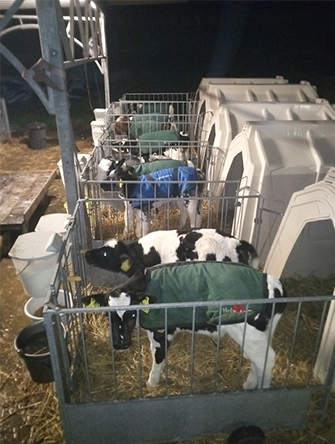
Our Calf-Tel jackets for calves are double insulated with two layers of 250g polyester. It is lightweight, warm, and thin enough to allow the calf to move about freely. The finely woven fibers in this insulation are designed to help trap and hold body heat, while allowing moisture to escape. Of course, this type of tightly woven filling costs a bit more than some of the less-insulating, water-repellant fillings on the market today, but delivers real value to the calf on those cold, winter nights.

Types of Lining. On the lining, we normally are looking at a fabric that is both soft and water repellant. I do see some cheaper calf jacket styles that will have fleece or flannel linings, but again in the best interests of keeping the calf truly warm and dry, polyester or nylon blends are the best option for their water-repellant quality.

Just as we shop for jackets that will keep our youngest human family members warm, we should give the same consideration to our youngest herd members who lack the body fat reserves to keep themselves warm in the coldest temperatures.

Additional features. Calf-Tel jackets feature a big buckle at the front of the jacket that is fully adjustable on both sides to adjust the jacket sizing as the calf grows. There is no Velcro to get matted with straw and bedding material. The rear leg straps are also elastic and adjustable for the comfort of the calf. Remember to check the sizing on the rear straps, so the calf isn’t rubbing off hair on her hind quarters with straps that are too tight.

I like to equate the difference in calf jackets to this: Would we send a young child skiing down a mountainside in a simple, single layer windbreaker or would we be certain they were wearing a high quality, triple layer jacket offering real insulation from the winter winds? I think our calves should be treated no differently.

Kelly Driver, MBA has been involved in the New York dairy industry all her life. In addition to raising dairy calves and replacement heifers, she is the Eastern US & Canada Territory Manager for Calf-Tel. Feel free to contact her at kellydriver@hampelcorp.com with your calf questions or suggest a topic you would like addressed in a future blog.

Courtesy of our dealer –

CRI REPRODUCCIÓN ANIMAL

MÉXICO SA DE CV

Barn Windmill

Locate your nearest Calf-Tel dealer

Our dealers understand the complexities of raising cattle and can help identify the best, most cost-effective solution for your operation.