

By Samantha Paszkiewicz, MS
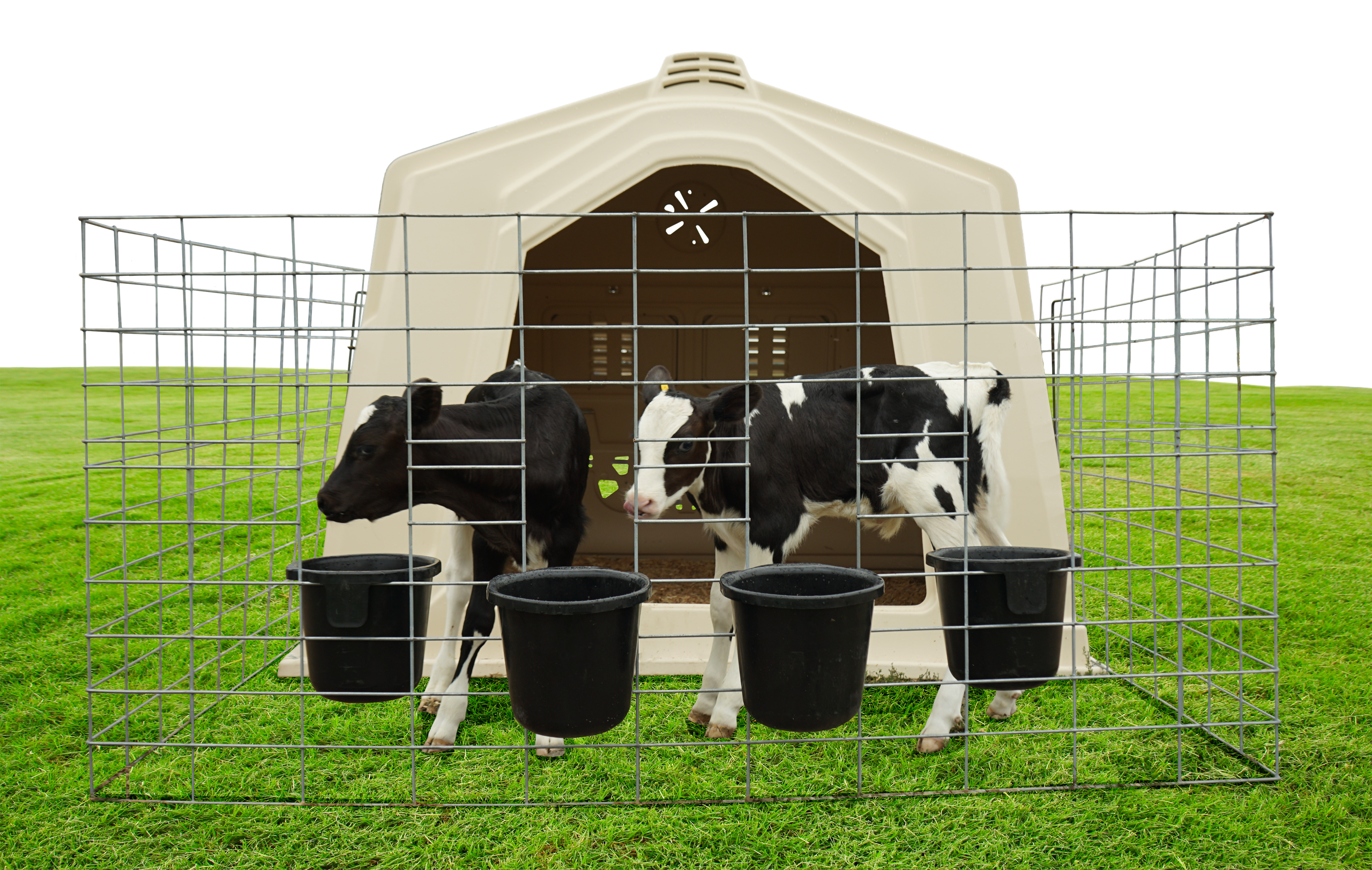
For decades, individual calf housing has been the standard management practice on many farms. The approach offered excellent monitoring and disease control, but recent research has demonstrated that calves also have important social needs that influence their growth, health, and long-term development.
Pairing calves is not a new concept but as the practice spreads and regulations form, an expanding body of research from leading universities including the University of Wisconsin- Madison, University of Florida, University of British Columbia, etc., shows that paired housing provides measurable benefits for calf welfare and productivity without compromising health and performance. See our previous post from Jennifer Van Os here for more information.
The Benefits
Improved Performance
One of the most consistent findings across pair housing studies is improved starter intake. Earlier starter consumption leads to smoother rumen development and prepares calves for weaning. In a recent study at the University of Florida, researchers found that paired calves:
- Consumed more starter beginning around 5 weeks of age
- Achieved greater average daily gain before and after weaning
- Reached heavier body weights by the end of weaning
- Maintained weight advantage after weaning
A 2025 review examining paired and triplet-housed calves found a similar pattern: in all six studies that measured starter intake while feeding calves at least 7L of milk per day, socially housed calves consumed more starter during the preweaning or postweaning period than individually housed calves (Plaugher & Cantor, 2025).
These findings reinforce decades of research showing that pair housing improves performance precisely when calves face one of their greatest challenges in transitioning from milk to feed.
Healthier Behaviors
There are numerous systematic reviews that have found increased opportunities for play and positive social interactions that paired calves demonstrate:
- Better social behavior
- Reduced fear of unfamiliar environments
- Greater willingness to explore
- Improved adaptability to management changes
These behavioral changes are crucial because calves raised with appropriate early social contact often transition more successfully into larger groups later in life. The University of Florida study reported that paired calves spent more time standing and were generally more active than individually housed calves, suggesting greater engagement and a natural daily rhythm with their environment (Miller-Cushon et al., 2025).
A 2025 review in the Journal of Dairy Science evaluated 48 studies comparing paired and individually housed calves. Overall, paired calves demonstrated better social behavior in group pens down the road and more flexible responses to management procedures with less stress responses (Bučková et al., 2025).
What About Disease?
If two calves share space, doesn’t that increase disease transmission? It’s a reasonable concern. Disease control was a primary reason why the calf raising standard leaned towards individual housing, but the evidence suggests that calves can be successfully housed without sacrificing health if the surrounding management system is strong. Current research doesn’t show a simple relationship between pairing and poor health; A 2025 review found no association between pair housing and bovine respiratory disease (BRD) in all seven studies it evaluated. Similarly, 7 of 8 studies found no negative effect of paired housing on diarrhea events (Plaugher & Cantor, 2025). The limitation of these studies, however, is in the different diagnostic methods and management practices of individual farms.
In the case of disease, the fundamentals still apply: excellent colostrum management, clean feeding equipment, adequate ventilation, dry bedding, and daily health observation.
What About Cross-sucking?
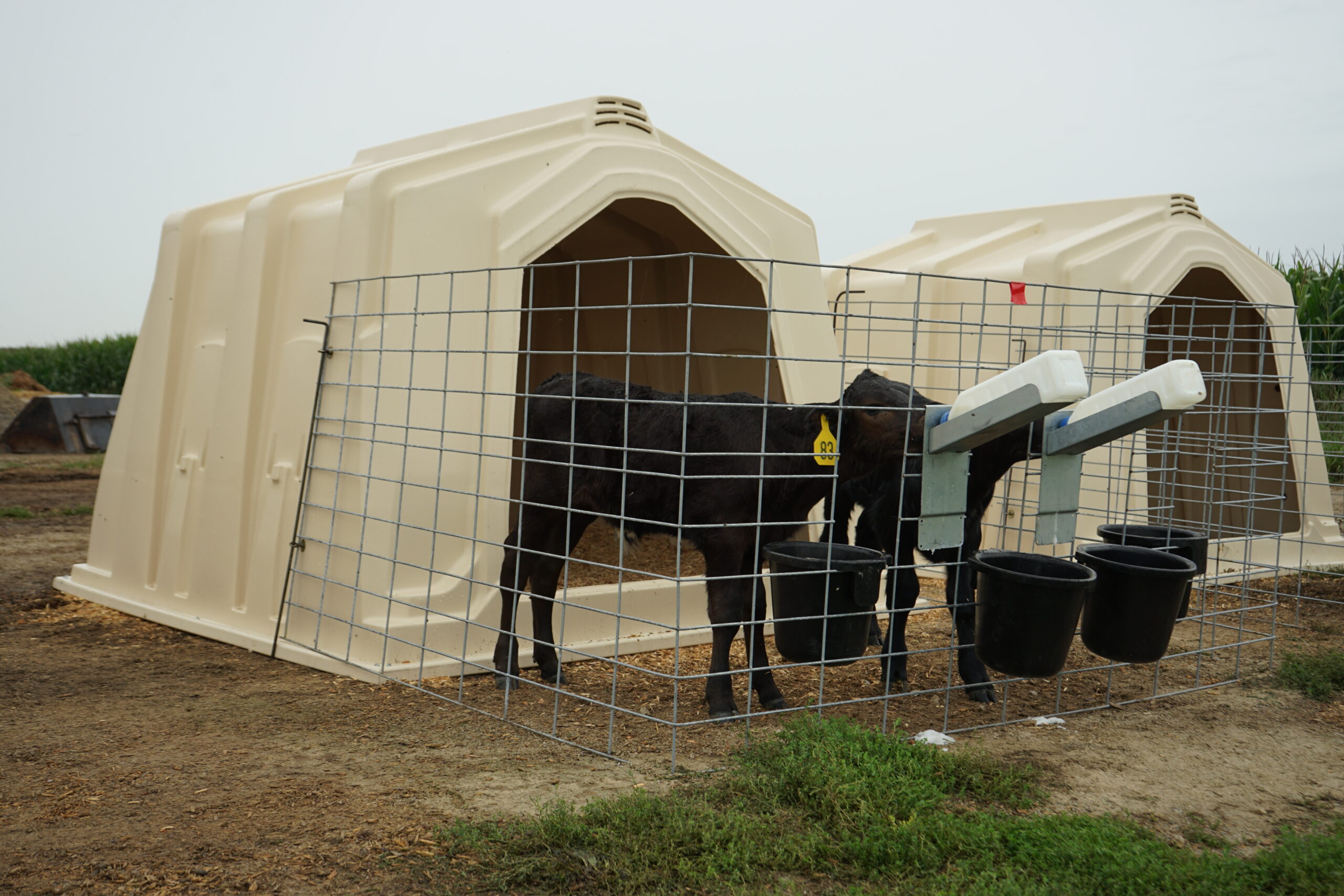
Cross-sucking occurs when a calf sucks another calf’s ears, naval, udder area, or other body parts. It is one of the most cited practical challenges associated with paired calf housing. Sucking is a highly motivated natural behavior in young calves. When that motivation isn’t adequately satisfied during feeding, calves may redirect it towards their pen mate (Wormsbecher et al., 2017).
Research suggests several management practices that can help reduce this behavior (Plaugher & Cantor, 2025; Salter & Van Os, 2020):
- Feeding milk through a teat rather than an open pail
- Providing adequate milk allowance
- Allowing calves sufficient opportunity to suck after milk consumption
- Providing separate access to starter and forage
- Giving the calves adequate space
Best Practices
When to Pair
The benefits of paired housing occur when calves are introduced early in life. But not too early. Calves face the greatest pathogen challenge when they are 1-2 weeks old. We recommend pairing when calves are 2-2.5 weeks old if healthy.
Duration of Pairing
Paired housing can extend through the entire preweaning period. Many of the performance advantages were observed during weaning, when calves are relying more heavily on starter intake and are socially encouraged to eat. For better transition success, steadily increase group size before releasing to herd.
Avoid Regrouping
Once calves are paired, keeping those pairs stable help reduce stress and social disruption. Frequent regrouping forces calves to establish new social relationships, which leads to an increase in competition and limiting the benefits of companionship.
Designated Feeding Space per Calf
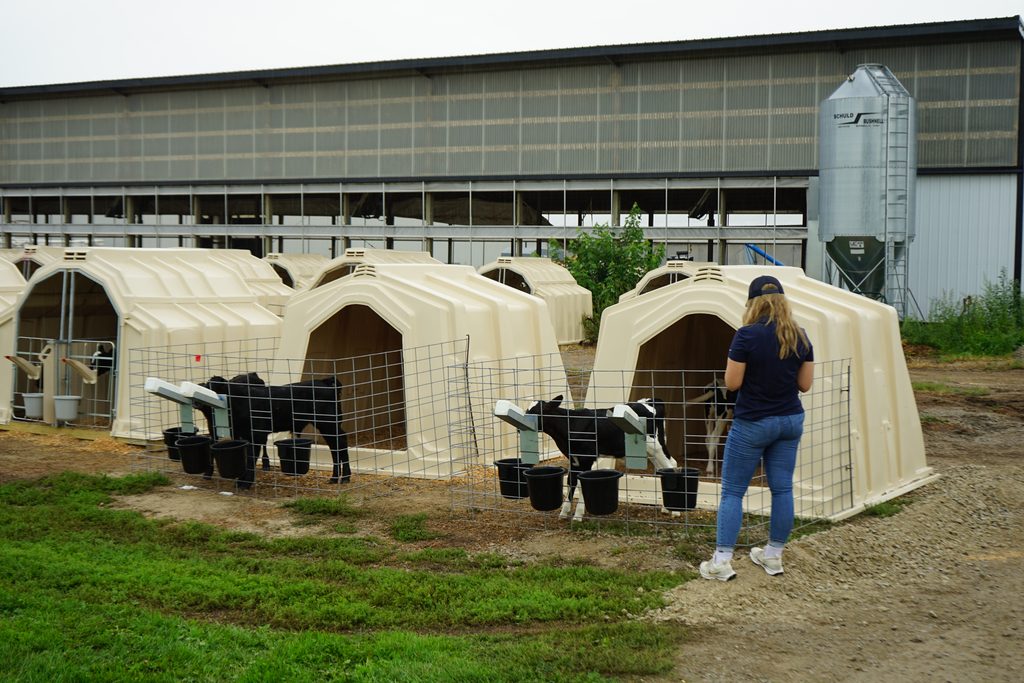
One of the keys to success is ensuring each calf has its own milk feeding position, starter bucket, and water source to eliminate unnecessary competition. Studies monitoring paired calves found excellent growth performance with low levels of cross-sucking when having two designated feeding stations.
Provide adequate space
Paired housing needs to provide enough room for calves to rest comfortably and engage in natural behaviors. Adequate space reduces competition, encourages exercise and play, and allows calves to interact with their companion or rest independently. Research has shown that increased space promotes activity and individual comfort.
Bringing Paired Housing to the Farm with TwinMax
The science behind paired housing is compelling, meaning new welfare regulations are not far behind. Successful implementation will depend on having housing specifically designed for two calves. The housing system must encourage positive social interaction while ensuring each calf has equal access to feed, water, and rest space.
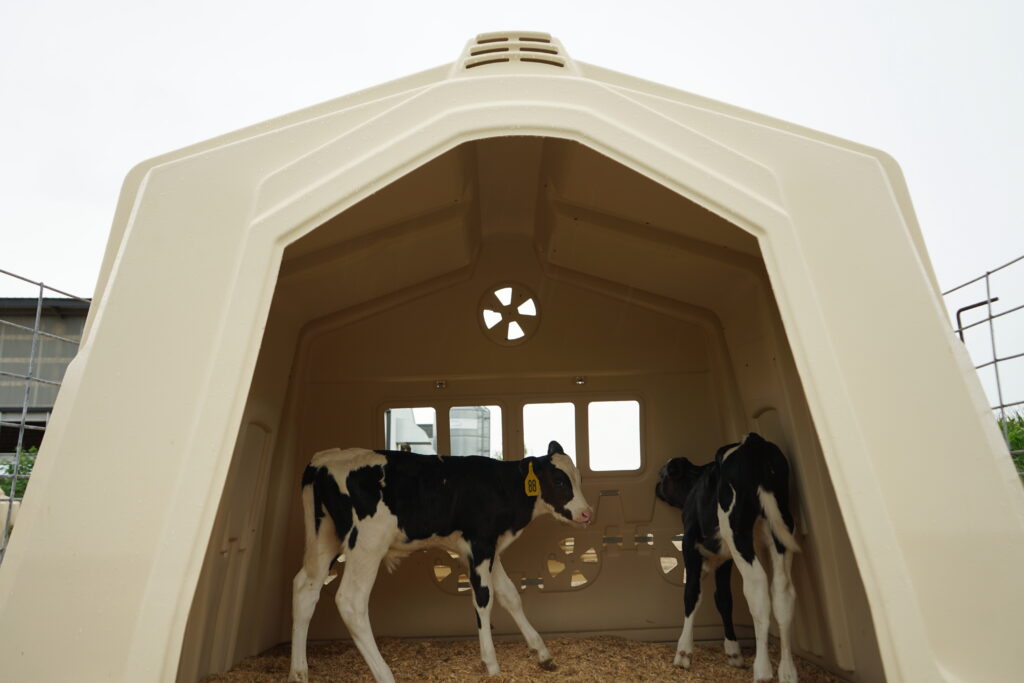
The Calf-Tel TwinMax was developed with these principles in mind. Designed specifically for raising calves in pairs, TwinMax provides the space and features producers need to capture the proven benefits of paired housing while maintaining the ease of management that our individual hutches are known for. Here is how its design lines up with what the research says matters most.
Room for Two and Room to Roam
TwinMax provides 52.98 sq. ft. of sheltered space for two calves. Adding the TwinMax Wire Fence brings the total to nearly 97 sq. ft.—about 48 sq. ft. per calf—with room to play, explore, rest comfortably, and move apart.
A Feeding Station for Each Calf
The fence’s 88-inch front holds up to four Direct Attach Pails and at least two bottle holders, giving each calf dedicated access to milk, water, and starter.
Bottle holders support teat feeding, while spaced feeding positions help limit competition and manage cross-sucking. An adequate milk allowance and keeping nipples available briefly after feeding can further satisfy calves’ natural sucking behavior.
Designed for Daily Calf Care
Successful pairing depends on ventilation, dry bedding, clean equipment, and daily observation. TwinMax supports these practices with:
- Ventilation: Upper, lower, and ridge vents totaling 742 sq. in.
- Bedding access: Large rear doors simplify bedding maintenance and calf checks.
- Removable feeding equipment: Individual pails and bottles make cleaning straightforward.
Simple to Set Up and Manage
TwinMax’s durable, one-piece thermoformed hutch requires no assembly. Molded structural ribs provide strength, while its 135-lb weight and standard lifting bracket simplify moving between groups.
TwinMax at a Glance
- Interior space: 52.98 sq. ft.
- Outside dimensions: 97.75″ L × 88″ W × 70.5″ H
- Fence dimensions: 72″ L × 88″ W × 42″ H
- Feeding capacity: Up to four Direct Attach Pails and at least two bottle holders
- Weight: 135 lbs, with standard lifting bracket
TwinMax combines space, dedicated feeding access, and practical care features to support successful paired housing.
Visit the TwinMax product page for full specifications, photos, and compatible feeding accessories.
References
Bonney-King, J., Lindner, E. E., Bittar, C. M. M., & Miller-Cushon, E. K. (2025). Pair housing benefits performance and activity of dairy calves with influences of season. Journal of Dairy Science, 108(10), 11432–11442. https://doi.org/10.3168/jds.2024-25819
Bučková, K., Moravcsíková, Á., & Šárová, R. (2025). A systematic review of the effects of pair housing on dairy calf welfare and productivity. Journal of Dairy Science, 108(12), 12878–12902. https://doi.org/10.3168/jds.2024-26251
Costa, J. H. C., von Keyserlingk, M. A. G., & Weary, D. M. (2016). Invited review: Effects of group housing of dairy calves on behavior, cognition, performance, and health. Journal of Dairy Science, 99(4), 2453–2467. https://doi.org/10.3168/jds.2015-10144
De Paula Vieira, A., von Keyserlingk, M. A. G., & Weary, D. M. (2010). Effects of pair versus single housing on performance and behavior of dairy calves before and after weaning. Journal of Dairy Science, 93(7), 3079–3085. https://doi.org/10.3168/jds.2009-2516
Miller-Cushon, E. K., & Jensen, M. B. (2025). Social housing of dairy calves—Management factors affecting calf behavior, performance, and health: A systematic review. Journal of Dairy Science, 108(4), 3019–3044. https://doi.org/10.3168/jds.2024-25468
Plaugher, G., & Cantor, M. C. (2025). A scoping review on pair housing dairy calves: Health and performance outcomes and tactics to reduce cross-sucking behavior. Frontiers in Veterinary Science. https://pubmed.ncbi.nlm.nih.gov/40654510/
Wormsbecher, L., Bergeron, R., Haley, D., de Passillé, A. M., Rushen, J., & Vasseur, E. (2017). A method of outdoor housing dairy calves in pairs using individual calf hutches. Journal of Dairy Science, 100(9), 7493–7506. https://doi.org/10.3168/jds.2017-12559